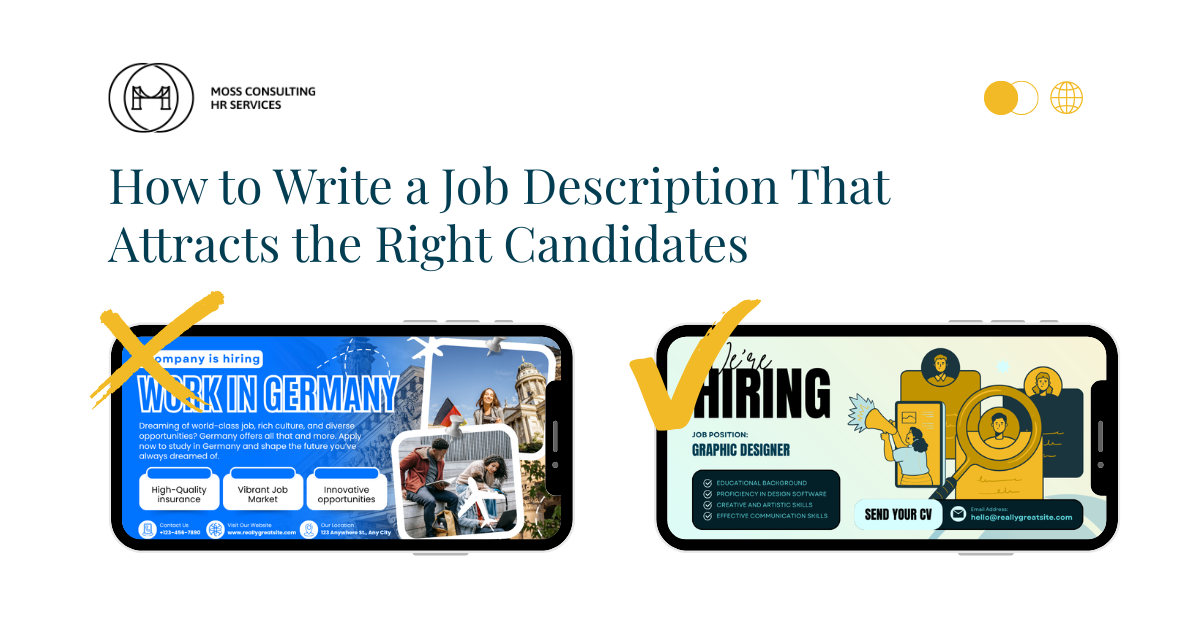
A job description is more than a list of tasks. It's your first impression as an employer - and for many candidates, it's the deciding factor in whether they apply or scroll past.
Most job descriptions fall into one of two traps: they're either so vague that anyone could apply, or so overloaded with requirements that nobody does. Neither gets you the right candidate.
Here's how to write a job description that attracts qualified people, sets clear expectations, and keeps you compliant.
Start With a Clear, Searchable Title
Avoid internal jargon or creative titles that candidates won't search for. "Marketing Coordinator" will get found. "Marketing Ninja" or "Brand Evangelist" won't - and it makes your company look less professional than it is.
Use standard industry titles that match what candidates are actually typing into job boards.
Write a Compelling Summary (2-3 Sentences)
Before diving into the details, give candidates a reason to keep reading. What's the purpose of this role? What will they be doing at a high level? Why is this an exciting opportunity?
This isn't the place for your company's entire mission statement. It's a quick pitch: here's what this role does and why it matters.
List 5-7 Core Responsibilities
Resist the urge to list everything the person might ever do. Focus on the primary responsibilities - the things they'll spend most of their time on.
Use action verbs and be specific. "Manage social media accounts, including content creation, scheduling, and performance reporting" is much better than "Handle social media."
If the list is longer than 7-8 items, you might be describing two jobs. That's worth thinking about.
Separate Required vs. Preferred Qualifications
This is one of the most important distinctions in a job description - and most companies get it wrong.
Required qualifications are true dealbreakers. If someone doesn't have these, they cannot do the job. Think: licenses, certifications, specific technical skills, minimum years of relevant experience.
Preferred qualifications are "nice to have" items that make a candidate more competitive but aren't essential.
When you put everything under "Required," you discourage qualified candidates from applying - especially those from underrepresented backgrounds, who are statistically more likely to opt out if they don't meet every single criterion.
Include Compensation Information
More and more states and cities are requiring salary transparency in job postings. But even where it's not legally required, including a pay range is smart.
Job postings with salary information get significantly more applications. Candidates want to know if a role is in their range before investing time in the process. And being upfront about compensation signals that you respect their time.
If you can't share an exact range, provide a general band and note that it depends on experience.
Say Something Real About Your Culture
"We're a fast-paced, dynamic team" tells candidates nothing. Every company says that.
Instead, share something specific: how your team communicates, what flexibility looks like in practice, how decisions are made, what growth opportunities exist. Give candidates a real sense of what it's like to work at your company.
What to Leave Out
Anything that could violate anti-discrimination laws. Don't reference age ("young and energetic team"), physical attributes, family status, or any protected characteristic. Requirements that aren't actually required - like a bachelor's degree for a role where relevant experience would suffice. Internal jargon or acronyms that external candidates won't understand. And unrealistic "unicorn" qualifications that describe a perfect candidate who doesn't exist.
A Simple Template Structure
Use this framework as a starting point: Job Title, Summary (2-3 sentences), Responsibilities (5-7 bullet points), Required Qualifications (3-5 items), Preferred Qualifications (2-4 items), Compensation and Benefits, About the Company (2-3 sentences), and How to Apply.
Your Job Post Is Your Brand
Every job description you publish reflects your company. A sloppy, jargon-filled, or unrealistic posting tells candidates something about how you run your business - and it's not something good.
Take the time to get it right. Your next great hire is reading your job post right now. Make sure it speaks to them.
Need help writing compliant, effective job descriptions? We do this every day. Reach out anytime.
mossconsulting.com/book-a-free-consultation