How to Write a Performance Improvement Plan (PIP) That Actually Works
HRBestPractices • PIP • MossConsulting • ManagementTips • EmployeePerformance • SmallBusiness • PerformanceManagement • HRTips • Aug 27, 2026, 8:00:01 AM • Author: Nicole Moss
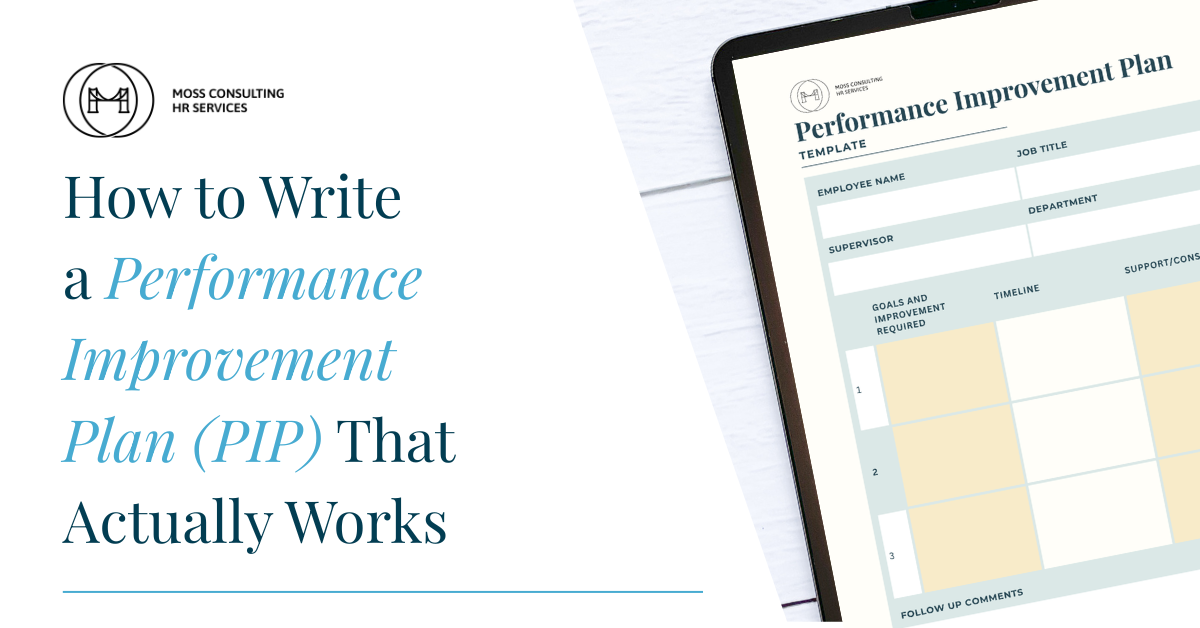
Performance Improvement Plans have a reputation problem.
Many employees hear “PIP” and immediately think, “I’m about to be fired.” And too often, PIPs are used as a formality before a termination decision has already been made.
But that is not what a PIP is supposed to be.
A well-written PIP that is specific, fair, and genuinely supportive can give an underperforming employee a real opportunity to turn things around. And if improvement does not happen, a well-documented PIP can also help support the company’s decision-making if the situation is later challenged.
Here’s how to write one that actually serves its purpose.
When to Use a PIP
A PIP may be appropriate when:
- Performance expectations have been clearly communicated.
- There is a meaningful gap between expectations and actual performance.
- In many cases, previous coaching or feedback has not resulted in enough improvement.
- There is a reasonable opportunity for the employee to improve with more structure and support.
A PIP should generally not come as a complete surprise. If an employee has never heard that there is a concern with their performance, consider whether coaching or direct feedback should happen first.
That does not mean every employee must receive informal coaching before a PIP. Some performance concerns may be serious enough to require formal action sooner.
The most important question is: Are you giving the employee a genuine opportunity to improve?
If the answer is no because the decision to terminate has already been made, a PIP probably is not the right tool.
The Five Components of an Effective PIP
1. Specific Performance Gaps
Clearly explain where the employee’s performance is falling short.
Avoid vague statements like:
“Needs to improve attitude.”
Instead, identify the behavior, result, or expectation that is not being met.
For example:
“Three project deadlines were missed within the past 60 days, resulting in delays and client complaints.”
The employee should be able to read the PIP and understand exactly what needs to change.
2. Clear, Measurable Goals
Next, define what successful improvement looks like.
“Be more proactive” is difficult to measure.
“Complete assigned projects by the stated deadline with no more than one revision cycle” gives both the employee and the manager something objective to evaluate.
Whenever possible, goals should answer a simple question:
How will we know if the employee has improved?
If that question cannot be answered clearly, the goal probably needs more work.
3. A Reasonable Timeline
Thirty-, 60-, and 90-day PIPs are common, but the timeline should fit the type of improvement you are asking the employee to make.
For example, an attendance issue may show measurable improvement fairly quickly. A technical skill gap may require additional training and more time before meaningful improvement can reasonably be evaluated.
Do not choose a timeline just because “that is how long PIPs usually last.” Give the employee a reasonable opportunity to demonstrate the specific improvement being requested.
4. Support and Resources
A PIP should explain what the company will do to help the employee succeed.
Support might include:
- Additional training
- More frequent manager check-ins
- Clearer instructions or documentation
- Coaching
- Access to tools or resources
- Temporary changes in priorities so the employee can focus on the areas that need improvement
- Identified specific performance concerns.
- Clearly communicated expectations.
- Established measurable goals.
- Provided a reasonable opportunity to improve.
- Offered appropriate support and resources.
- Explained potential consequences.
- Followed up throughout the process.
- Applied its performance standards consistently.
This part matters.
A PIP should not simply list everything the employee is doing wrong. It should show that the company is providing a genuine opportunity for the employee to meet expectations.
5. Consequences
The employee should also understand what may happen if sufficient improvement does not occur.
For example:
“Failure to meet the expectations outlined in this plan may result in further disciplinary action, up to and including termination of employment.”
The purpose is not to threaten the employee. It is to make sure there are no surprises about the seriousness of the situation.
How to Present a PIP
Meet with the employee privately and walk through the document together.
Explain the performance concerns, expectations, timeline, support available, and what will happen next.
Then give the employee an opportunity to ask questions and respond. Their perspective may provide context the manager did not previously know.
Ask the employee to sign the PIP acknowledging receipt. Their signature does not necessarily mean they agree with the assessment. It simply confirms that the PIP was provided and discussed.
If the employee refuses to sign, document the refusal. Having another manager or HR representative present can also be helpful.
Regular follow-up is just as important as the initial meeting.
For example, if the PIP lasts 60 days, consider meeting at least every two weeks to discuss progress, answer questions, and address any continuing concerns.
Keep brief notes from these conversations so there is a clear record of the employee’s progress throughout the process.
A Note on Medical or Accommodation Concerns
If an employee raises a medical issue or requests an accommodation during the PIP process, involve HR before moving forward.
The performance concern may still need to be addressed, but the company may also have obligations under applicable disability or leave laws.
Depending on the circumstances, the employer may need to consider whether a reasonable accommodation could help the employee meet the required performance expectations.
What Makes a PIP Fail
Vague Goals
If neither the manager nor the employee can objectively determine whether a goal has been met, the PIP is not doing its job.
Be specific.
No Meaningful Support
A PIP should not be a warning letter with extra steps.
If the company expects improvement, the employee should understand what tools, training, coaching, or manager support are available to help them get there.
Inconsistent Application
Consistency matters when addressing employee performance.
Employees with similar performance issues should generally be treated consistently unless there is a legitimate, documented reason for handling the situations differently.
Different circumstances may justify different decisions. For example, an employee’s previous warnings, position, performance history, severity of the issue, or other relevant facts may affect how the company responds.
The important part is being able to explain and document why the situations were handled differently.
Using the PIP Just to Check a Box
If the decision to terminate has already been made, do not use a PIP simply to create the appearance that the employee was given another chance.
Employees can usually tell when a process is not genuine.
If the company has legitimately reached the decision to terminate, move forward with the appropriate documentation and process rather than using a PIP simply to check a box.
The Documentation Matters
Even when a PIP does not result in enough improvement and employment ultimately ends, good documentation can still be valuable.
A thorough PIP can show that the company:
If an employment decision is later challenged, this documentation can help demonstrate the legitimate performance concerns behind the company’s decision.
Need a Template or Guidance?
Performance conversations are not always easy, especially when you are not sure whether coaching, a PIP, or another form of corrective action is the right next step.
Moss Consulting helps small businesses build performance management processes that are fair, practical, and effective.
If you are dealing with an employee performance issue and are not sure how to approach it, reach out. We can help you determine the right next step and build a process that works for both your employees and your business.
We're Here to Help